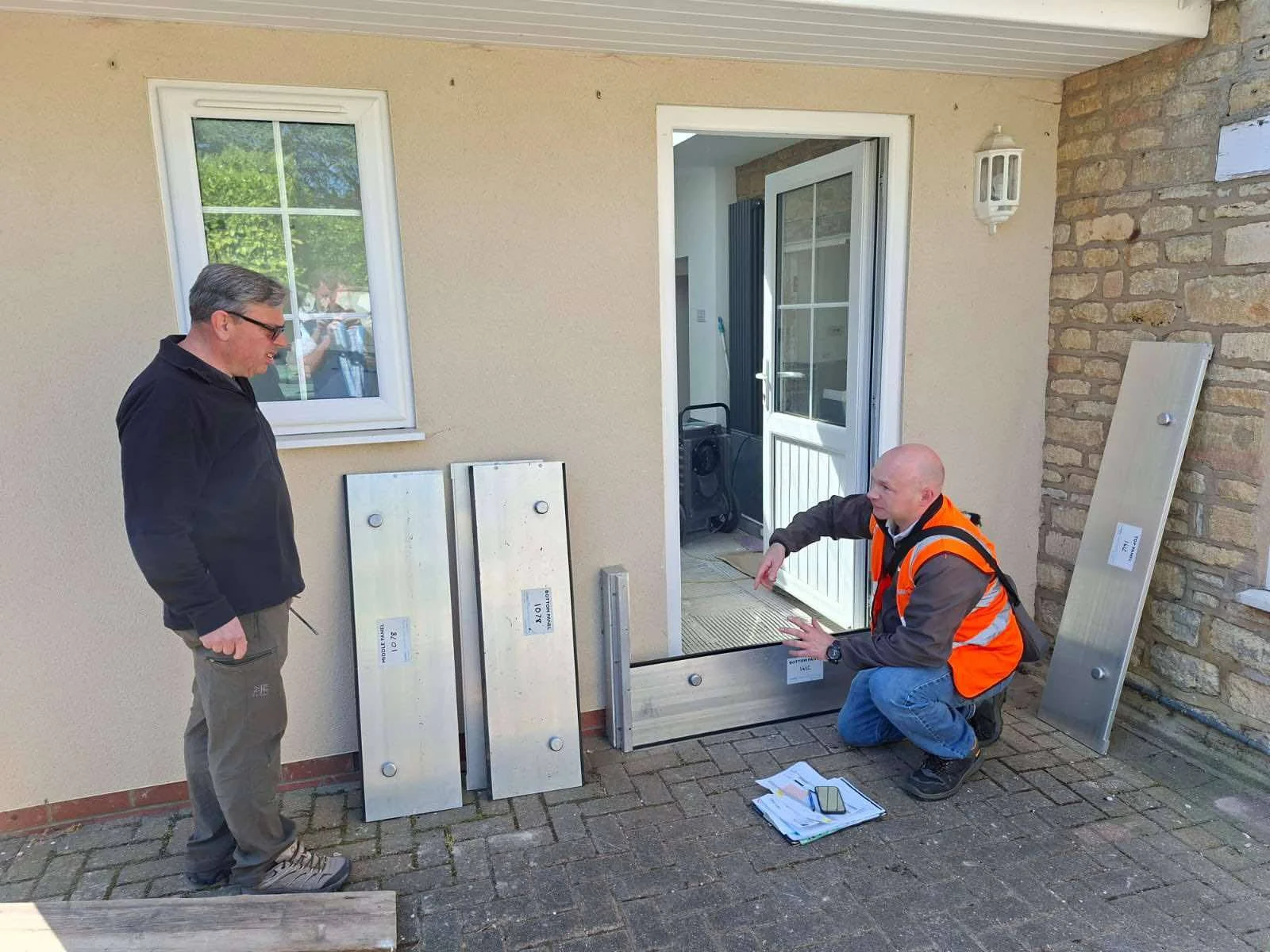
Which Flood Resilience measures are right for your property?
A recent Guardian article offered some excellent, practical advice on preparing homes for flooding.
With contributions from flood risk champion Mary Long-Dhonau OBE, as well as the National Flood Forum and Flood Re, it covered everything from checking brickwork and clearing gutters to self-closing airbricks, flood doors, non-return valves and flood-resilient materials.
It feels as though we’re starting to turn a corner when property flood resilience (PFR) is discussed in this level of detail by a national newspaper. The more people understand about the steps they can take before flooding happens, the better.
Having read the article, you may be looking at the products available and wondering what your own home actually needs. However, there is something important to remember: effective property flood resilience is not simply a shopping list.
A flood door may be right for one property but not another. A barrier will only work if somebody is available and able to put it in place. A non-return valve may help to address one potential route for water while leaving several others untouched.
The starting point for any physical PFR installation should always be the person, the property and the flood risk.
Start with a proper understanding of the risk
Before recommending products, a building-level flood survey should establish how the property is likely to flood, where water could enter and what effect different measures might have.
Floodwater does not always arrive through the front door. Depending on the property and the source of flooding, it may enter through doors and low-level windows, airbricks and vents, gaps around pipes or utility connections, cracks or weaknesses in walls and drains, toilets or other internal pipework – and more.
These potential routes need to be considered together - fitting a flood door at the front of a house will be of limited value if water can still enter through an unsealed airbrick or through the drainage system.
A survey should also consider the construction, condition and structural characteristics of the building. Sometimes the most appropriate approach is to reduce the amount of water entering and adapt the property with materials to help it recover more quickly.
Permanent or manually deployed?
The Guardian article usefully highlighted the difference between measures that operate automatically and those that need to be deployed when flooding is expected.
A self-closing airbrick is designed to close as floodwater rises, while a temporary airbrick cover has to be found and manually fitted in time. The same distinction applies to doors - a flood-resilient door provides day-to-day access while also helping to reduce water ingress. A removable barrier must be stored safely and installed correctly before the water arrives.
Neither approach is automatically right or wrong. What’s important to note is that the best choice depends on the property, the level and source of risk, the warning time available and the people who will need to use the measure.
Questions that should be asked include:
Is someone normally at the property?
How much warning are they likely to receive?
Can they safely lift, carry and install a barrier?
Could the occupants be away, asleep or otherwise unable to respond?
Would the measure affect everyday access to the building?
This is why considering the person is just as important as the property itself. After all, a technically sound measure is not the right option if the resident cannot operate it safely and confidently.
Individual measures also need to work together as part of an integrated design. A flood door, for example, will be of limited value if other entry points have not been considered and addressed.
Why the CIRIA PFR Code of Practice matters
Watertight works in line with the CIRIA Code of Practice for Property Flood Resilience.
The Code provides a structured process for assessing risk, surveying the property, designing and installing suitable measures, commissioning the completed work and explaining how it should be operated and maintained. It is supported by six standards setting out what should be achieved during the PFR delivery process.
For a homeowner, landlord or organisation responsible for multiple properties, this provides reassurance that the process goes way beyond choosing products from a catalogue.
Preparedness is a key part of resilience too
Physical measures can help to reduce damage and disruption but they should sit alongside practical preparedness.
Mary’s advice about creating a flood to-do list and keeping essentials together in a Flood Preparedness Pack is a great example. The Guardian article also highlighted signing up for warnings, knowing how to turn off utilities, moving important belongings and identifying neighbours who may need extra support.
Digital tools can help people turn that advice into a practical plan. The Resilico platform, for example, enables residents, schools and businesses to create a flood plan for any property, receive flood alerts and keep track of the maintenance of their PFR measures. This helps to ensure that important information is readily available and that installed measures continue to work as intended.
No system can remove flood risk entirely, however the aim is to help people and properties to become better prepared, reduce the likely impact and make recovery easier if flooding does occur.

A Watertight Preparedness Pack
The right measures for every property
The growing amount of practical consumer information about flooding is very welcome. It helps people understand that there are steps they can take and that they do not have to wait until water is approaching the door.
The next step is making sure any physical measures are appropriate. That applies whether you are considering resilience measures for your own home or are responsible for a larger portfolio of housing, commercial buildings, schools or community assets.
For local authorities, housing providers and landlords, the same principles apply at every property. Each building needs to be assessed individually, while the needs and capabilities of its occupants must form part of the design. There also needs to be a clear plan for installation, handover, ongoing maintenance and record-keeping across the portfolio.
Whether resilience measures are being considered for one home or hundreds of properties, the question should not simply be “Which products should we buy?” It should be “How could each property flood, who will need to use any measures, and what combination will work best?”.
That is the approach we take at every address: that is the Watertight Way.